How a Strong AI SaaS Idea Fails Before Launch: Day-N Architecture, After-Hours Burnout, and MVP Scope Governance
Muhammet Alperen Çınar (Founder & Product Manager · CAPM® Certified) · · 8 min read
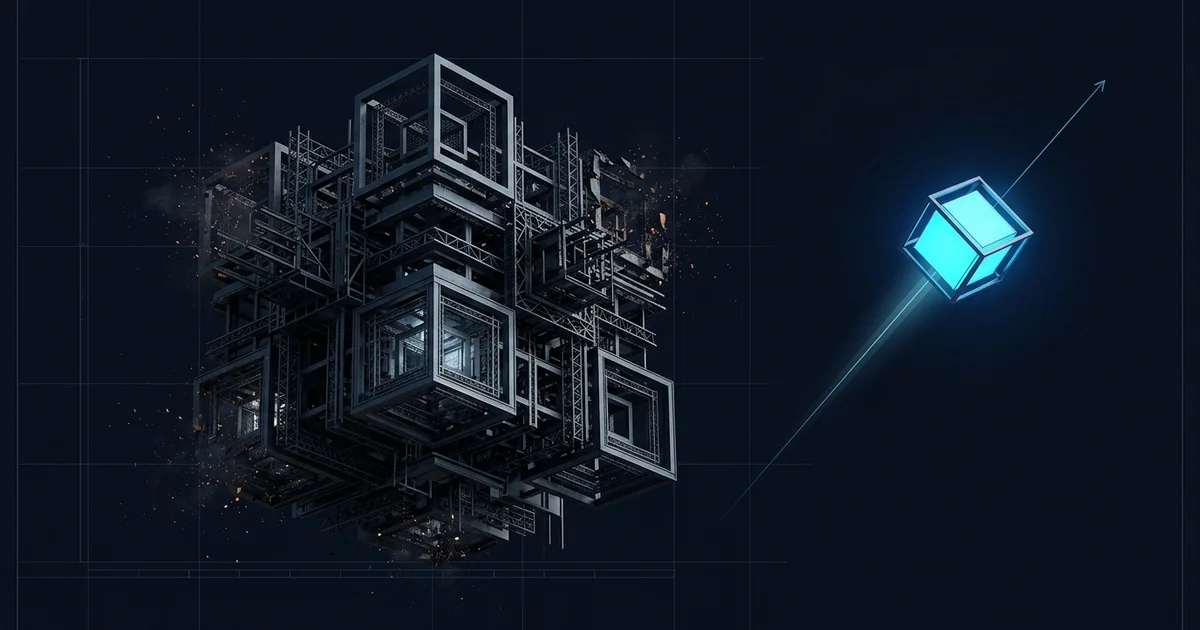
TL;DR Summary: Because AI lets teams spin up software in an hour, unmarketed B2B code quickly becomes dead weight. That pushed our three-person after-hours team to start building a B2B AI SDR targeting live hiring and news signals. Yet letting developers chase Day-N architecture and heavy premature security instead of locking a simple MVP burned everyone out: one left at month one, the second at month three, and we never shipped.
What Is Premature Day-N Architecture in Project Delivery?
Premature Day-N architecture is a common project delivery trap where an early-stage team spends months building enterprise-grade distributed systems, edge-case permission layers, and heavy scaling infrastructure before shipping Version 1 to a single paying customer. In side projects run by engineers working nights and weekends outside full-time day jobs, human focus and weekly morale are strictly finite resources. Unlike funded full-time capacity, every evening spent configuring complex infrastructure without external user feedback drains energy that never resets easily. When a product lead approves technical gold plating instead of enforcing a narrow MVP boundary and a short shipping deadline, launch dates keep slipping. Without real user reactions or early sign-ups to justify those late nights, even talented engineers gradually lose momentum, hit burnout when day-job demands spike, leave one by one, and leave a solid B2B idea unshipped.
Part-Time AI SaaS Project Governance: What Failed vs What Works
Contrasting unrestricted technical gold plating against strict scope locks when team hours are bounded.
| Governance Dimension | Our Unshipped Post-Mortem Path | Disciplined PM Delivery Standard | Impact on Team Retention |
|---|---|---|---|
| Architecture Target | Day-N enterprise scale & complex hardening in V1 | Managed defaults & simplest path to user #1 | Prevents hidden backlog bloat before traction |
| Resource Reality | Assumed full-time velocity from after-hours engineers | Budgeted strictly for finite evening/weekend energy | Avoids chronic fatigue & month-1 attrition |
| PM Scope Control | Deferred to developers’ preferred deep abstractions | Written MVP boundary + explicit non-goals gate | Protects engineers from over-scoping |
| Feedback Loop Timing | Zero live launch until "everything is production-grade" | Forced 2–4 week ship window to validate demand | Real customer wins sustain after-hours morale |
1. The Premise Was Sound: Solving B2B Distribution When Coding Takes an Hour
The product thesis was strong because while AI lets teams write SaaS apps in an hour, B2B products without active sales outreach rarely find buyers.
Across B2B startups today, technical barriers to shipping software prototypes have collapsed. Yet faster coding created a harder bottleneck: without an upstream search and AI citation capture engine or an active outbound pipeline, clean software sits unseen and goes nowhere.
To solve that gap, we started building a B2B AI SDR platform that researched target companies from public web data, scanned live hiring and company news signals, scored product fit, and drafted personalized LinkedIn outreach messages. The market pain was clear, so why did the project stall before reaching its first live user?
2. Inside the 3-Person After-Hours Collapse: Month 1 and Month 3 Attrition
Our three-person team worked outside full-time day jobs; when endless groundwork blocked a visible launch, developer #1 left after 1 month and developer #2 left after 3 months.
Unlike venture-backed teams sitting together forty hours a week, all three contributors on this project, including me as founder and project lead alongside two engineers, worked evenings and weekends around full-time jobs. In side-project work, energy does not reset cleanly like paid agency hours; every dragged-out sprint eats directly into rest and focus.
Because we never crossed a visible launch milestone or put a working screen in front of users, team retention broke down in clear stages:
- Month 0 Kickoff (3 People): Strong shared excitement around the AI SDR vision, with zero binding limits on backend depth.
- Month 1 Exit (Developer #1 Leaves): As full-time day-job demands grew heavier, building dense infrastructure late at night became unsustainable, leading our first engineer to step away after four weeks.
- Month 3 Exit (Developer #2 Leaves): Carrying heavy unshipped architecture alongside full-time work for two more months wore down the remaining engineer, stopping the build completely before launch.
3. Root Cause: Chasing Day-N Architecture and Premature Security Inside MVP
Instead of building minimal scraping and LinkedIn draft workflows to test buyer demand, engineers spent their after-hours energy on final-stage architecture and enterprise security.
Side projects usually fail when talented engineers spend their limited hours solving the wrong problems first. In Version 1, all we needed was a lean flow that scanned public company signals and drafted solid LinkedIn messages for five early founders.
Instead, our roadmap drifted toward building "end-stage architecture" designed for thousands of paying corporate tenants. Investing weeks into distributed resilience, complex permission trees, and deep edge-case hardening with zero active users breaks both Martin Fowler’s YAGNI ("You Aren’t Gonna Need It") rule and standard CAPM scope discipline (Gold Plating). We burned out finishing rooms in a building nobody could walk into yet.
| Premature Focus Area | Energy Cost on Side-Project Hours | Actual Need Before User #1 | Healthier V1 Alternative |
|---|---|---|---|
| Day-N Scaling Infrastructure | Weeks of evening debugging & setup | Support 5–10 manual design-partner seats | Managed single-tier cloud & standard DB rules |
| Enterprise Security Hardening | Deep edge-case engineering before PMF | Clean auth + basic tenant isolation (RLS) | Defer advanced compliance until paid traction |
| Automated Multi-Channel Sequences | Exponential state-machine complexity | Single reliable signal scan + LinkedIn draft | Validate reply quality before full automation |
4. My Leadership Self-Critique: Where I Failed to Lock MVP Scope
Looking back as Project Lead, the root mistake was mine: when engineers pushed for Day-N architecture, I never should have approved it and should have locked them to MVP scope.
It is easy for a founder to explain away an unshipped product by saying team members got busy at their day jobs. Honest project leadership requires owning governance mistakes directly. Skilled engineers naturally gravitate toward clean, future-proof system designs when nobody restricts their backlog, especially when no weekly revenue deadline forces shortcuts.
As the Product and Project Manager, my job was locking a narrow Version 1 product boundary to guard a tiny three-person evening budget from self-inflicted scope creep. Saying yes to final-stage architecture instead of holding the line from our Product Management frameworks archive drained team morale before launch. That hard lesson directly shapes CINAR Technologies founder & CAPM® engineering background today.
5. Four Strict Delivery Rules This Failure Forced Into My Playbook
Every product launched afterward across CINAR Technologies enforced tight shipping windows, managed third-party defaults, and early user contact shaped by this post-mortem.
A failed build pays off only when it changes how you run the next team. Every workflow I led later, most clearly our capital-efficient zero-self-hosting FinTech playbook, rests on four hard rules from this breakdown:
1. Plan Around Real Evening Energy, Not Idealized Feature Lists
After-hours teams run on visible progress. If an infrastructure choice takes over two weeks before anyone can test a working flow, cut half of that stack right away.
2. Lock Engineers to MVP Scope Explicitly (PM Veto Power)
Engineers should own clean code inside agreed boundaries, while expanding V1 into unapproved Day-N security or scale layers requires an explicit PM sign-off.
3. Separate Day-1 Safety From Day-100 Security
Basic authentication, safe secret handling, and tenant data isolation stay non-negotiable from Day 1, while heavy compliance engineering waits until customer traction funds operations.
4. Fix the Launch Date Before Writing Code (Shape Up Gate)
Set an explicit external shipping window upfront and flex features when needed. Shipping one focused workflow on time protects team pride; delaying endlessly kills momentum.
Frequently Asked Questions
Why do side projects by full-time software engineers often stall before launch?
After-hours engineers spend their core mental focus at work, leaving a small evening budget. When weeks go into invisible infrastructure and Day-N engineering with zero user contact, morale collapses before launch can bring motivating feedback.
What does "gold plating" mean in project management post-mortems?
Gold plating happens when teams add unrequested technical sophistication, premature scale layers, or extra optimizations outside defined scope requirements, burning finite schedule budget without proportionate customer value.
Should MVP teams compromise security or write sloppy code to move faster?
No. Baseline authentication, safe secrets, and tenant data isolation are mandatory from Day 1, and managed services such as Supabase RLS solve them cleanly without writing custom end-stage security layers too early.
How should a Project Manager push back when engineers want over-engineered V1 architecture?
Set cycle budgets and non-goals in writing upfront. Explain that managed defaults protect the team’s own evenings until revenue arrives, and park complex scaling upgrades neatly inside a V2 backlog.
When is a failed project actually valuable for a Product Manager’s portfolio?
A pre-launch failure carries real weight when you diagnose scope slippage, part-time capacity limits, and premature Day-N engineering honestly and apply tighter delivery guardrails on shipped products afterward.